

Aircraft Bonding Testing: Why Electrical Bonding Resistance Matters
Modern aircraft rely on increasingly complex electrical and electronic systems. From avionics and communication equipment to navigation systems and flight controls, maintaining reliable electrical connections is essential throughout the aircraft’s life cycle.
One important part of this electrical integrity is aircraft bonding.
Electrical bonding helps ensure that conductive parts of an aircraft are electrically connected through suitable low-resistance paths. These connections play an important role in protecting the aircraft against static electricity, lightning effects, electromagnetic interference and electrical faults.
This makes aircraft bonding testing an essential operation during both aircraft production and maintenance.
But what exactly is electrical bonding, why does bonding resistance matter, and how can technicians verify the integrity of these connections?
What Is Electrical Bonding on an Aircraft?
Electrical bonding refers to the electrical connection of conductive components in order to create a continuous electrical path between
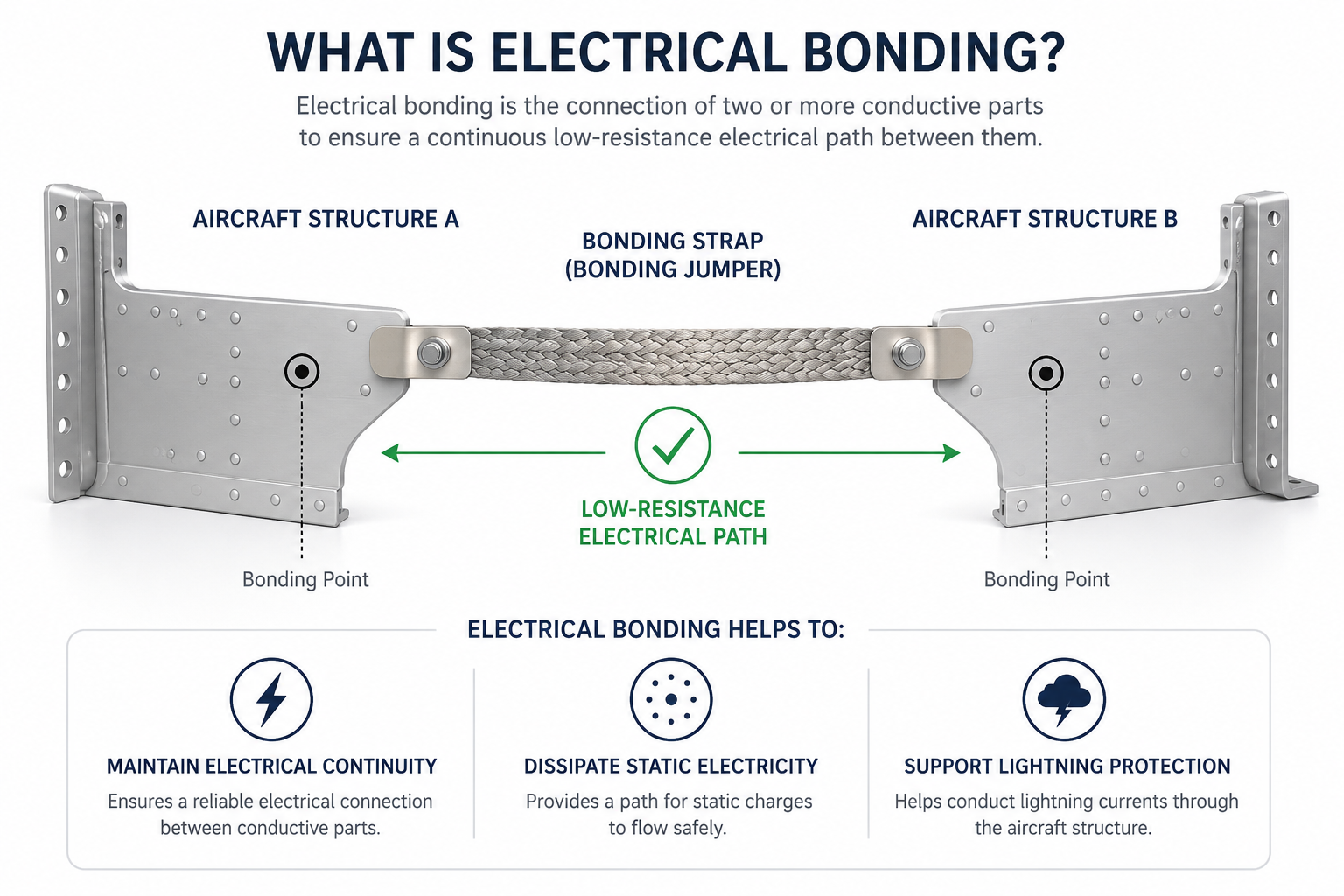
them. Throughout an aircraft, many metallic and conductive components need to maintain appropriate electrical continuity with the aircraft structure. Depending on the design, this may involve structural components, equipment, panels, engines, control surfaces, antennas and many other parts of the aircraft.
Electrical continuity can be achieved through direct contact between conductive structures or through dedicated components such as bonding straps or bonding jumpers.
The objective is to maintain an appropriately low electrical impedance between specified components and the aircraft’s electrical reference structure.
European aviation requirements specifically address electrical bonding and protection against static electricity. EASA CS-25 requires bonding systems to minimize the accumulation of electrostatic charge that could lead to electrical shock, ignition of flammable vapors or interference with installed electrical and electronic equipment.
Why Is Electrical Bonding Important?
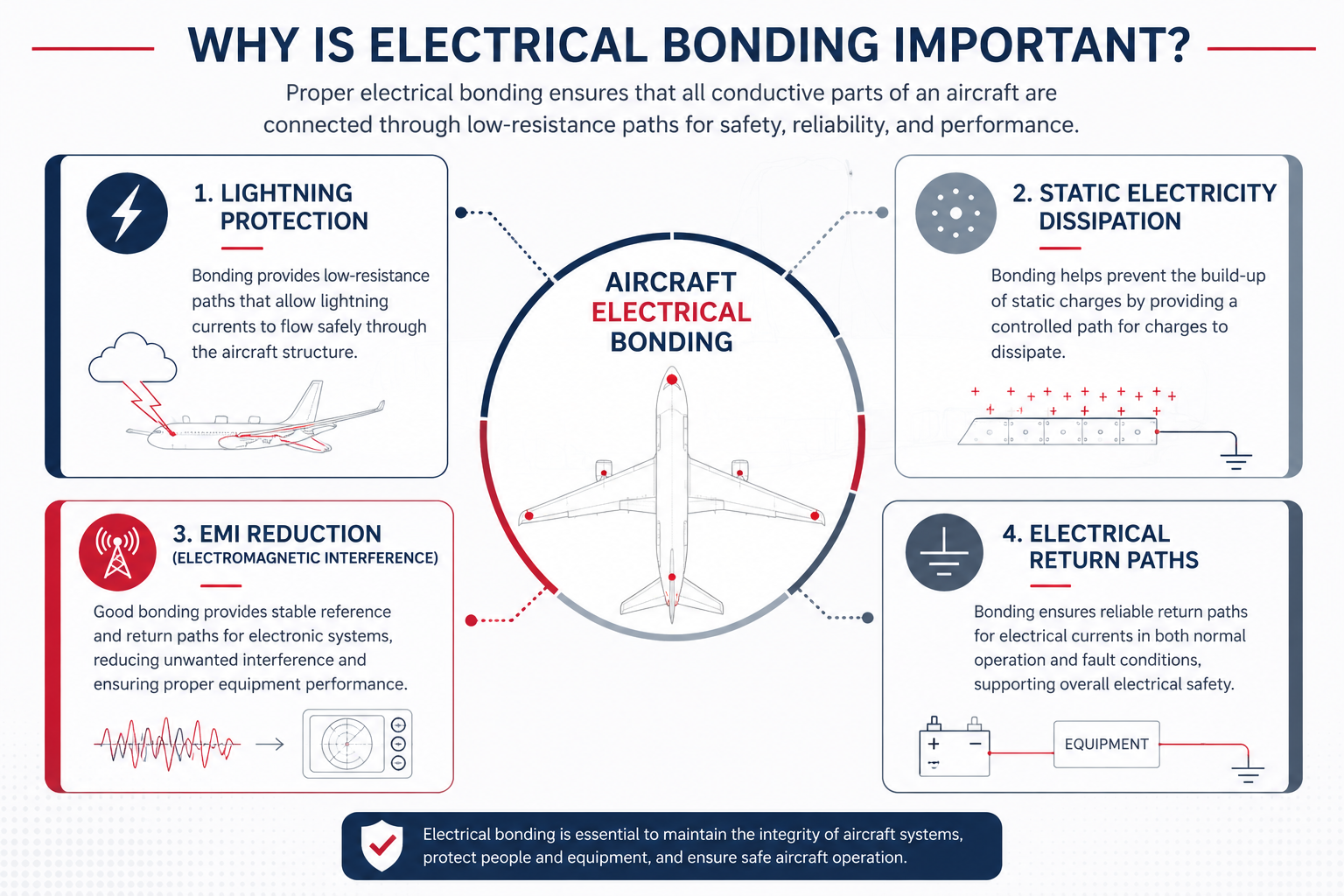
Aircraft electrical bonding serves several important functions.
- Protection Against Static Electricity
During operation, an aircraft can accumulate electrostatic charges due to airflow and other environmental conditions.
Without appropriate electrical paths, different conductive components can develop electrical potential differences. A subsequent discharge may interfere with electrical systems or, in certain environments, create additional hazards.
Proper bonding helps dissipate these charges through controlled electrical paths. EASA specifically requires aircraft bonding and static-protection provisions to minimize risks to people, flammable environments and installed electronic equipment.
- Supporting Lightning Protection
Aircraft are designed to withstand exposure to lightning, and electrical bonding forms part of the overall protection strategy.
Some bonding paths may need to carry lightning-related currents between different sections or components of the aircraft. Maintaining sufficiently low electrical impedance helps provide the intended conductive path.
EASA guidance notably identifies primary bonding paths as those required to carry lightning discharge currents and states that their electrical impedance should be kept as low as practicable.
- Reducing Electrical and Electromagnetic Interference
Modern aircraft contain numerous electrical and electronic systems operating simultaneously.
Poor bonding can contribute to unwanted electrical potential differences and interfere with the intended operation of sensitive electronic equipment.
Proper bonding helps establish reliable electrical reference and return paths, supporting the performance of systems such as communication, navigation and avionics equipment.
- Providing Electrical Return Paths
Bonding can also contribute to electrical safety by providing suitable return paths under both normal and fault conditions.
For aircraft with earthed electrical systems, EASA requirements specify that electrical bonding must provide an adequate electrical return path in normal operation as well as under fault conditions.
Why Does Bonding Resistance Need to Be Measured?
Creating an electrical bond does not automatically guarantee that the connection will maintain the required electrical characteristics throughout the aircraft’s service life.
Resistance can change due to several factors, including:
- Corrosion
- Oxidation
- Paint or protective coatings
- Contamination
- Loose connections
- Damaged bonding straps
- Mechanical wear
- Vibration
- Incorrect installation
- Environmental exposure
Even small changes can matter because aircraft bonding applications often involve very low resistance values.
This is why resistance measurement is an important method for verifying bonding integrity.
EASA guidance notes that experience has shown bond resistance measurement to be a preferred method of ensuring bond-path integrity. It also recognizes that bonding provisions can degrade during service, with inspections having identified corrosion and damage to bonding jumpers on aircraft.
How Is Aircraft Bonding Resistance Tested?
Bonding resistance testing generally involves measuring the electrical resistance between two specified points on the aircraft.
A low-resistance measuring instrument, or milliohmmeter, is connected to the relevant components using suitable probes and test leads. The instrument applies a known current and measures the resulting voltage drop to determine the resistance of the electrical path.
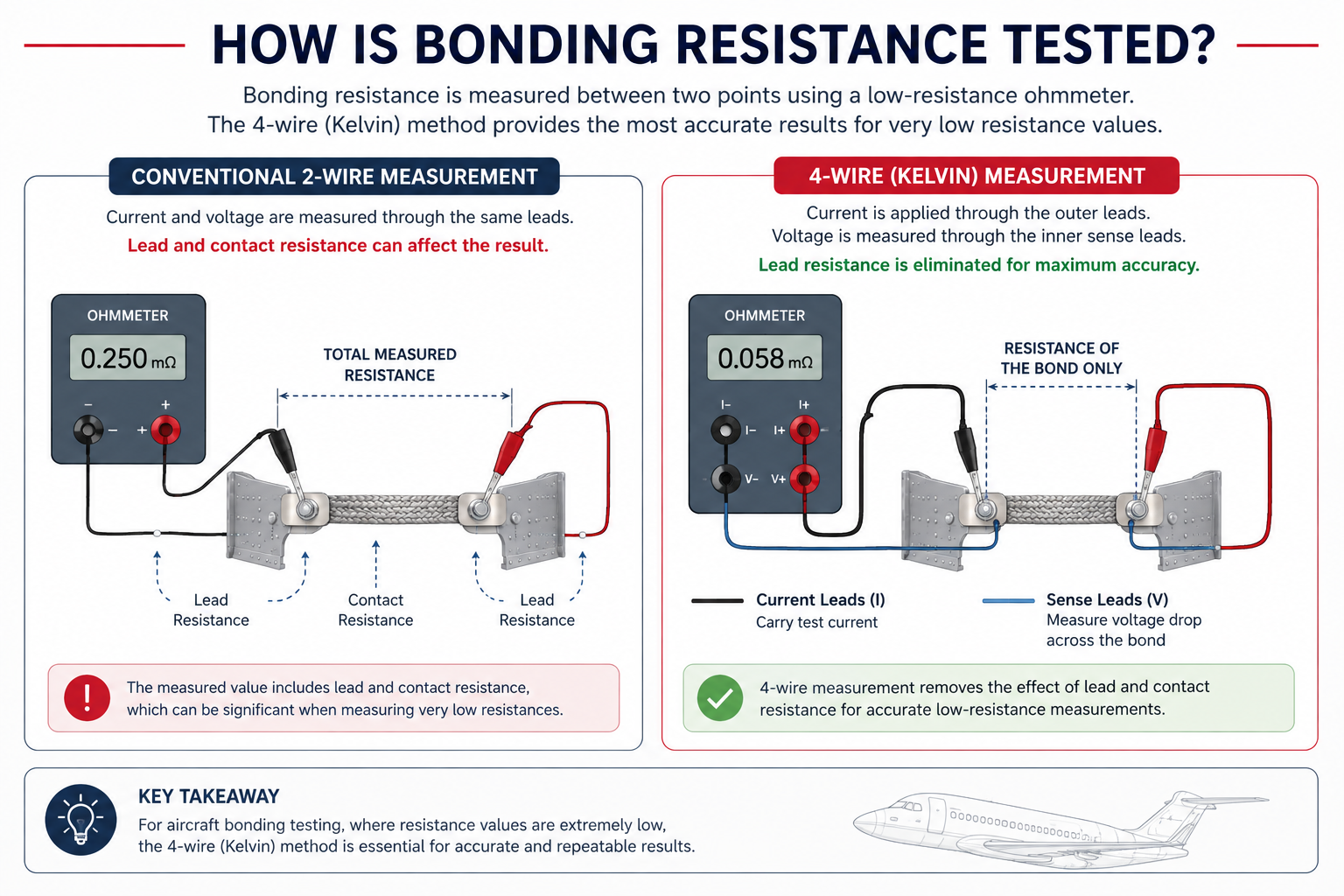
Because the resistance being measured can be extremely low, the resistance of the test leads and contacts themselves can influence conventional measurements.
This is why dedicated bonding testers can use a four-wire measurement method, also known as Kelvin measurement.
Why Use a Four-Wire Measurement?
In a conventional two-wire resistance measurement, the same leads carry the measurement current and sense the voltage. As a result, the resistance of the leads and connections can become part of the measured value.
This can be problematic when measuring very low resistances.
A four-wire method separates the current-carrying leads from the voltage-sensing leads. This significantly reduces the influence of lead resistance on the measurement and allows more accurate measurements of very low resistance values.
This principle is particularly suitable for aircraft bonding applications where technicians need precise and repeatable measurements.
Is There a Standard Aircraft Bonding Resistance Value?
One important point when discussing aircraft bonding is that there is no single resistance value applicable to every bond on every aircraft.
The acceptable resistance depends on factors such as:
- The function of the bond
- The aircraft design
- The type of component
- The materials involved
- The location of the connection
- The electrical system architecture
- Lightning protection requirements
- Static electricity requirements
- Normal and fault current requirements
EASA guidance explicitly notes that the maximum resistance for electrical bonds varies depending on the type of bond.
For fuel systems, EASA also explains that it is not practical to establish one universal maximum bonding resistance because requirements depend on the particular aircraft design, materials, electrical sources, possible faults and overall bonding concept.
Technicians should therefore always refer to the applicable aircraft manufacturer’s documentation, maintenance manual, production specification or approved procedure when determining the acceptable bonding resistance.
What Can Cause Poor Electrical Bonding?
Electrical bonds are exposed to mechanical, environmental and operational conditions throughout the aircraft’s life.
Corrosion
Corrosion is one of the key factors that can compromise bonding integrity.
Moisture, environmental conditions, chemicals and material combinations can gradually affect the quality of electrical contact.
EASA has documented cases of degradation of electrical bonding provisions on in-service aircraft, including corrosion, discoloration and damage to bonding jumpers.
Paint and Protective Coatings
Aircraft structures frequently use paint, anodized surfaces and other protective treatments.
While essential for protecting components, these materials can also act as electrical insulators. The preparation of bonding surfaces and the correct installation of bonding connections are therefore important considerations.
Loose or Damaged Connections
Aircraft are exposed to vibration and repeated mechanical stresses throughout their operational life.
Loose fasteners, damaged bonding straps or deteriorated connections can affect electrical continuity and increase resistance.
Maintenance and Component Replacement
Bonding integrity can also be affected when components are removed, repaired or replaced.
After maintenance work involving a bonded component, technicians may need to verify that the electrical connection continues to meet the applicable requirements.
Aircraft Bonding Testing During Production
Bonding resistance testing is not limited to aircraft already in service.
It is also an important part of aircraft manufacturing and assembly.
During production, numerous structures, systems and components are progressively installed. Electrical continuity must be maintained as different sections of the aircraft come together.
Bonding measurements can therefore be performed at different stages of the assembly process to verify the quality of electrical connections.
Testing during production can help identify issues such as:
- Improper surface preparation
- Insufficient electrical contact
- Incorrect component installation
- Excessive resistance
- Incorrect or damaged bonding connections
Detecting these issues during assembly helps ensure that the completed aircraft meets the applicable electrical bonding requirements before entering service.
Aircraft Bonding Testing During Maintenance
Once an aircraft enters service, bonding connections remain exposed to vibration, temperature changes, moisture, environmental contaminants and general ageing.
Maintenance operations can also affect existing bonds.
Bonding resistance checks may therefore be performed as part of:
- Scheduled aircraft maintenance
- Troubleshooting
- Structural inspections
- Component replacement
- Bonding strap replacement
- Repairs
- Corrosion inspections
- Electrical system investigations
Visual inspection can identify obvious problems such as corrosion, broken straps, loose connections or missing bonding provisions.
However, visual inspection does not always provide enough information about the electrical performance of the connection.
For critical bonds, EASA guidance indicates that visual inspection alone may not be adequate and that other inspection methods may be required.
Resistance measurement therefore provides technicians with quantitative information that can be compared with the applicable aircraft requirements.
Choosing the Right Equipment for Aircraft Bonding Testing
Measuring very low resistance values requires equipment specifically suited to the application.
When selecting equipment for aircraft bonding resistance measurement, several characteristics should be considered:
- Low-resistance measurement capability
- Measurement accuracy and repeatability
- Four-wire measurement capability
- Appropriate measurement currents
- Suitable probes and test leads
- Portability
- Ease of use around the aircraft
- Data storage and traceability
- Suitability for both production and maintenance environments
The objective is not only to obtain a resistance value, but also to provide technicians with a reliable and repeatable measurement process.
Aircraft Bonding Testing with the ATEQ AX6000
ATEQ Aviation’s AX6000 Portable Milliohmmeter is designed for bonding resistance measurement on aircraft, helicopters and other aerospace applications, for both production and maintenance environments.
The AX6000 provides four-wire resistance measurement and covers measurements from 1 μΩ to 6 Ω, with measurement currents of up to 10 A depending on the selected range.
Designed for use around the aircraft, it combines portability with measurement capabilities adapted to very low resistance applications. Its internal memory can store up to 2,000 readings, supporting measurement recording during testing operations.
These characteristics make the AX6000 suitable for technicians and engineers performing bonding resistance measurements during aircraft assembly, inspection and maintenance operations.
Supporting Electrical Integrity Throughout the Aircraft Life Cycle
Electrical bonding may not be one of the most visible aspects of an aircraft, but its role is essential.
From aircraft assembly to decades of operational service, maintaining appropriate electrical continuity contributes to static electricity management, lightning protection, electromagnetic compatibility and reliable electrical return paths.
Bonding resistance testing gives aircraft manufacturers and maintenance teams a practical way to verify that these electrical connections continue to perform as intended.
Whether measurements are carried out during production, scheduled maintenance, troubleshooting or repair, using appropriate low-resistance measurement equipment helps technicians obtain accurate and repeatable results while verifying compliance with the applicable aircraft specifications.


